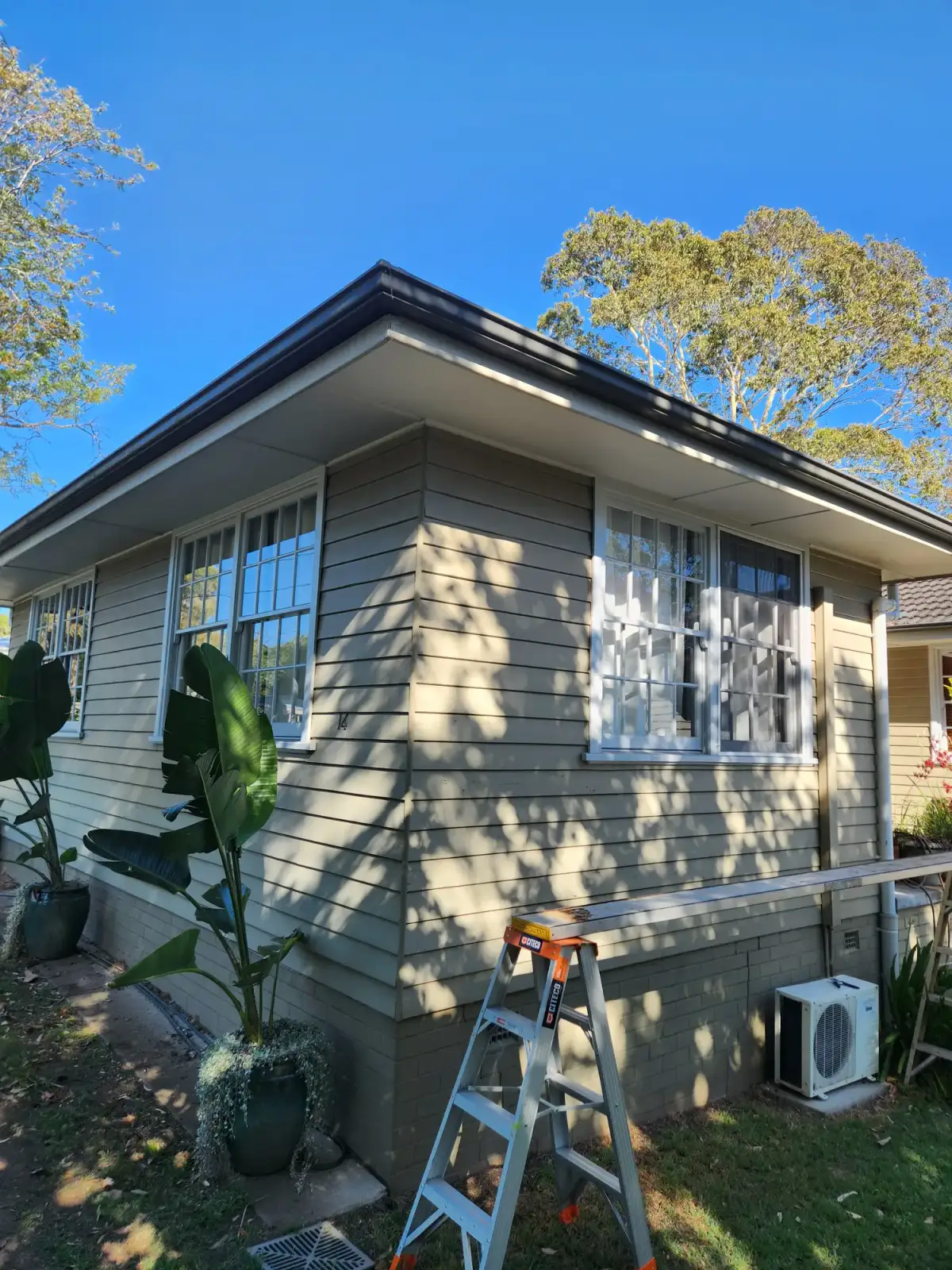
Weatherboard on the coast is a harder job than inland
Timber and salt air are a difficult combination. The boards move with heat and humidity, the joints open, and salt-laden moisture gets behind the coating through those gaps rather than through the paint film itself. That is why so many coastal weatherboard repaints fail at the lap joints, board ends, and window surrounds while the middle of each board still looks acceptable. The fix is not a better topcoat. It is dealing with the joints, the ends, and the fixings before priming, and then using a flexible system that keeps moving with the timber.
Board ends and cut edges
Water enters end grain far faster than face grain, so the cut ends at corners and around openings rot first. Those get treated and sealed with the appropriate primer before the boards are coated, which is the step most often skipped.
Nail pops and fixings
Hardwood pushes fixings back out as it moves, and near the coast every exposed nail head becomes a rust point that bleeds down the board. We punch, treat, and fill them rather than painting over the top.