How Many Coats of Exterior Paint Do I Need?
Coat count by surface type, drying time between coats, and what Newcastle's coastal conditions require for a finish that actually lasts.
Exterior coatings safety note
Exterior repaint projects involve ladders, abrasive preparation, and chemical primers. Always use appropriate PPE, keep work areas well ventilated, and choose licensed tradespeople for high-altitude or chemical-primer applications.
Coat count affects how long your paint job lasts — and whether it actually covers properly. Too few coats means thin coverage, early chalking, and repainting within two to three years. Too many wastes money. The right number depends on what surface you're painting, whether you're changing colour, and what Newcastle's coastal conditions demand.
Quick answer: Most exterior walls need two finish coats over a primer. Bare timber or a colour change often needs three. Render and fibre cement usually need two. Metal and coastal timber may need special primers and extra coats to last in Newcastle.
For cost expectations, see our exterior painting cost guide. For rust treatment on metal, see our rust removal guide. Or hand it over to our exterior painting in Newcastle team.
Coat counts by surface type
The number of coats depends on the substrate, its condition, and whether you are changing colour. Here is a practical guide for common exterior surfaces.
| Surface | Same Colour | Colour Change | Bare Surface |
|---|---|---|---|
| Timber | 1 primer + 2 coats | 1 primer + 2–3 coats | 1 primer + 2–3 coats |
| Weatherboard | 2 coats | 1 primer + 2–3 coats | 1 primer + 3 coats |
| Render | 2 coats | 1 primer + 2 coats | 1 primer + 2 coats |
| Fibre Cement | 2 coats | 1 primer + 2 coats | 1 primer + 2 coats |
| Metal | 1 metal primer + 2 coats | 1 metal primer + 2 coats | 1 rust primer + 2 coats |
How many coats of paint does a house exterior need in Australia?
In Australia, a house exterior needs two topcoats over sound, previously painted walls. Add a primer if the surface is bare, patched, or changing colour. So the usual system is one primer plus two coats. Strong sun and salt air are why local painters rarely drop back to a single coat.
Weatherboard is the surface people ask about most. A weatherboard house needs two coats over sound paint. On bare or patched timber, plan on a primer plus two to three coats. Boards move, and the end grain soaks up paint, so exposed edges often take an extra pass. In Newcastle, that extra coat is what keeps salt air out of the joints.
Spray vs brush and roller
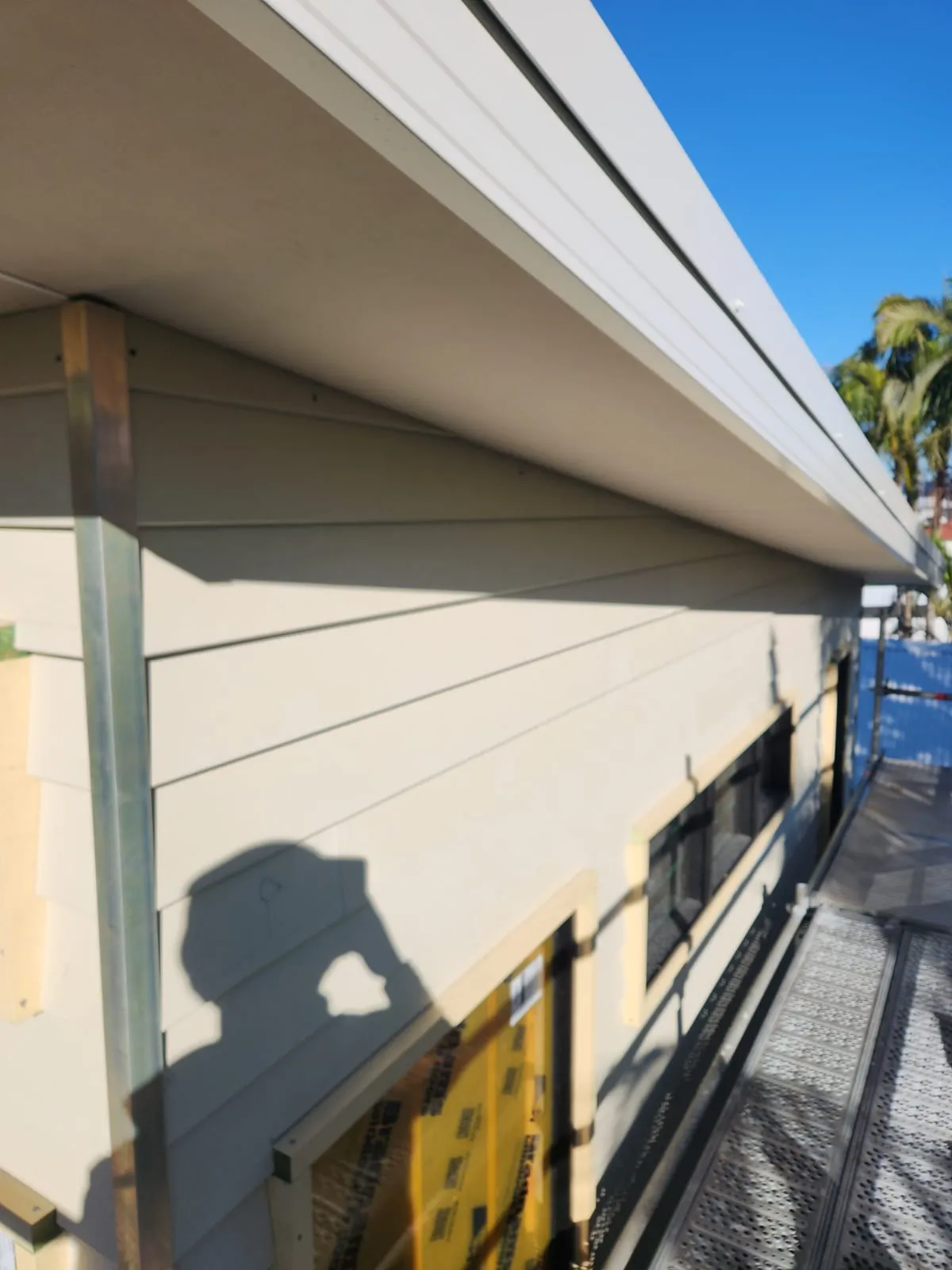
Spraying is faster on large open walls and gives a smooth, even finish. But each pass lays down a thinner film than rolling. So two coats are still essential. Spray does not reduce the coat count.
Many painters back-roll after spraying. This pushes paint into the surface, improves coverage, and builds the film evenly. You still need brush work for trims, edges, and corners. The same goes for detail around windows and doors. Spray overshoot into these areas does not count as a proper coat.
For most Newcastle exterior repaints, a combination works best. Spray the open wall sections. Then brush and roller the trims, fascia, and window frames.
Spray vs brush at a glance
| Method | Best surface | Coat count effect | Coastal suitability |
|---|---|---|---|
| Airless spray | Large open walls | Still needs 2 coats — thinner film per pass | Good — fast coverage |
| HVLP spray | Detailed areas, trims | Still needs 2 coats — very thin pass | Good — less overspray |
| Brush and roller | All surfaces, trims | 2 coats standard — thicker film per pass | Excellent — pushes into texture |
| Spray + back-roll | Large walls with texture | 2 coats — best adhesion result | Excellent — recommended for coastal |
Drying times between coats
Applying the second coat too early traps solvents and moisture, causing bubbling, peeling, or poor adhesion. Follow these minimum recoat times for exterior acrylics:
- Warm dry weather (above 20°C): 2 to 4 hours between coats
- Cool or overcast (10–20°C): 4 to 6 hours between coats
- Humid coastal conditions: 6 to 8 hours or wait until the next day
- Oil-based enamels (trims): 16 to 24 hours between coats
In Newcastle, afternoon sea breezes can bring moisture rapidly. Applying after lunch and allowing overnight drying before the second coat is a reliable approach during summer months. The sheen level of your topcoat also affects long-term durability — see our paint finish guide for coastal homes for which sheens hold up best against salt air.
Want us to handle the job?
We use the right coat system for your surface and conditions — saving you guesswork and getting it right the first time. Free on-site quote, written scope, 5-year workmanship warranty.
Exterior Paint Coat FAQs
Quick answers about coat counts, drying times, and application methods.
You might also find useful
 Prep
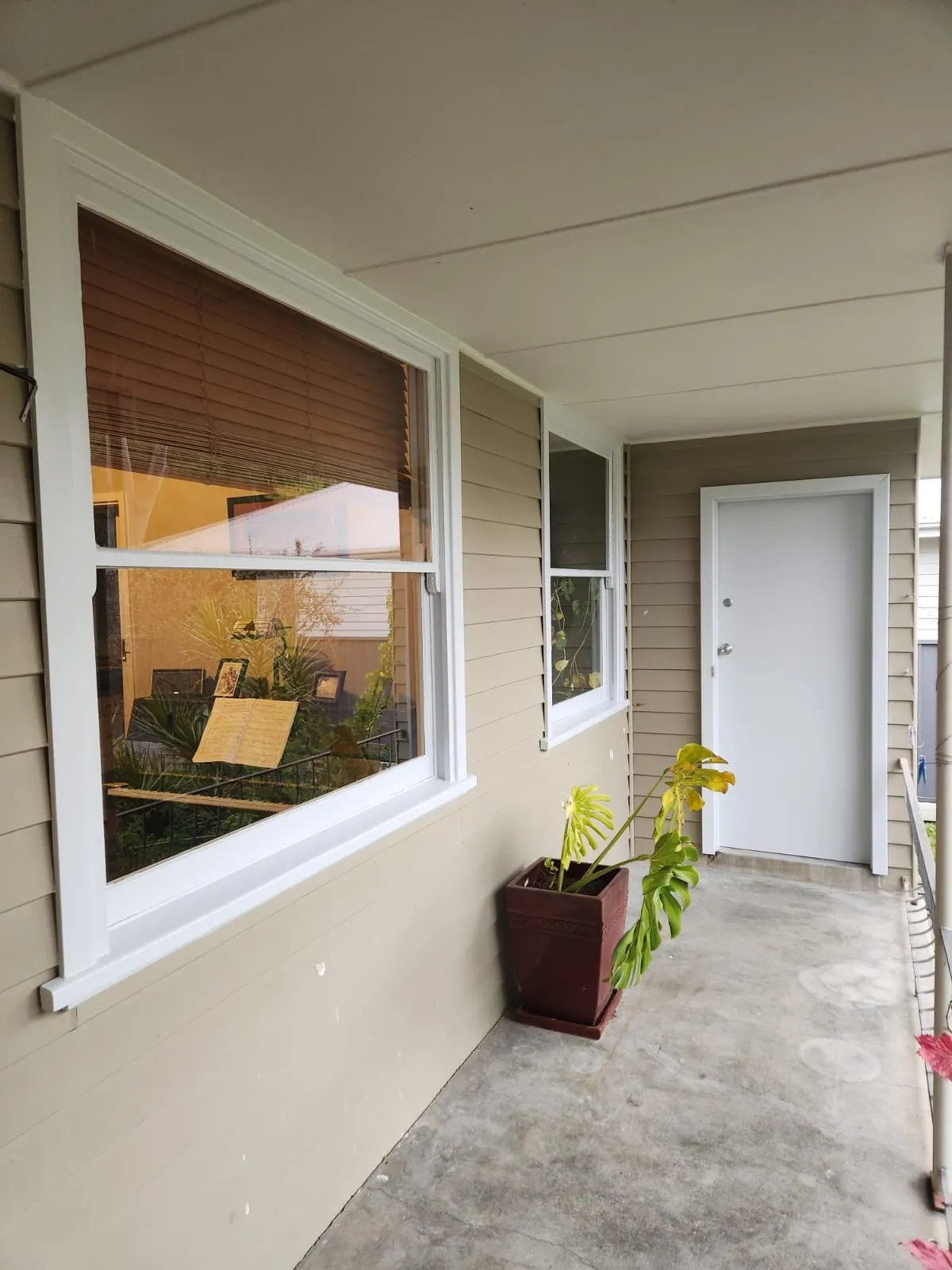
PrepHow to Prepare Walls for Painting in Newcastle
Clean, repair, sand, and prime step by step, plus the coastal prep that makes paint last.
Read guide Prep
PrepRemove Rust Before Painting
Rust removal methods for better metal paint adhesion.
Read guide Prep
PrepPressure Washing Before Painting
When and how to wash exteriors before painting starts.
Read guide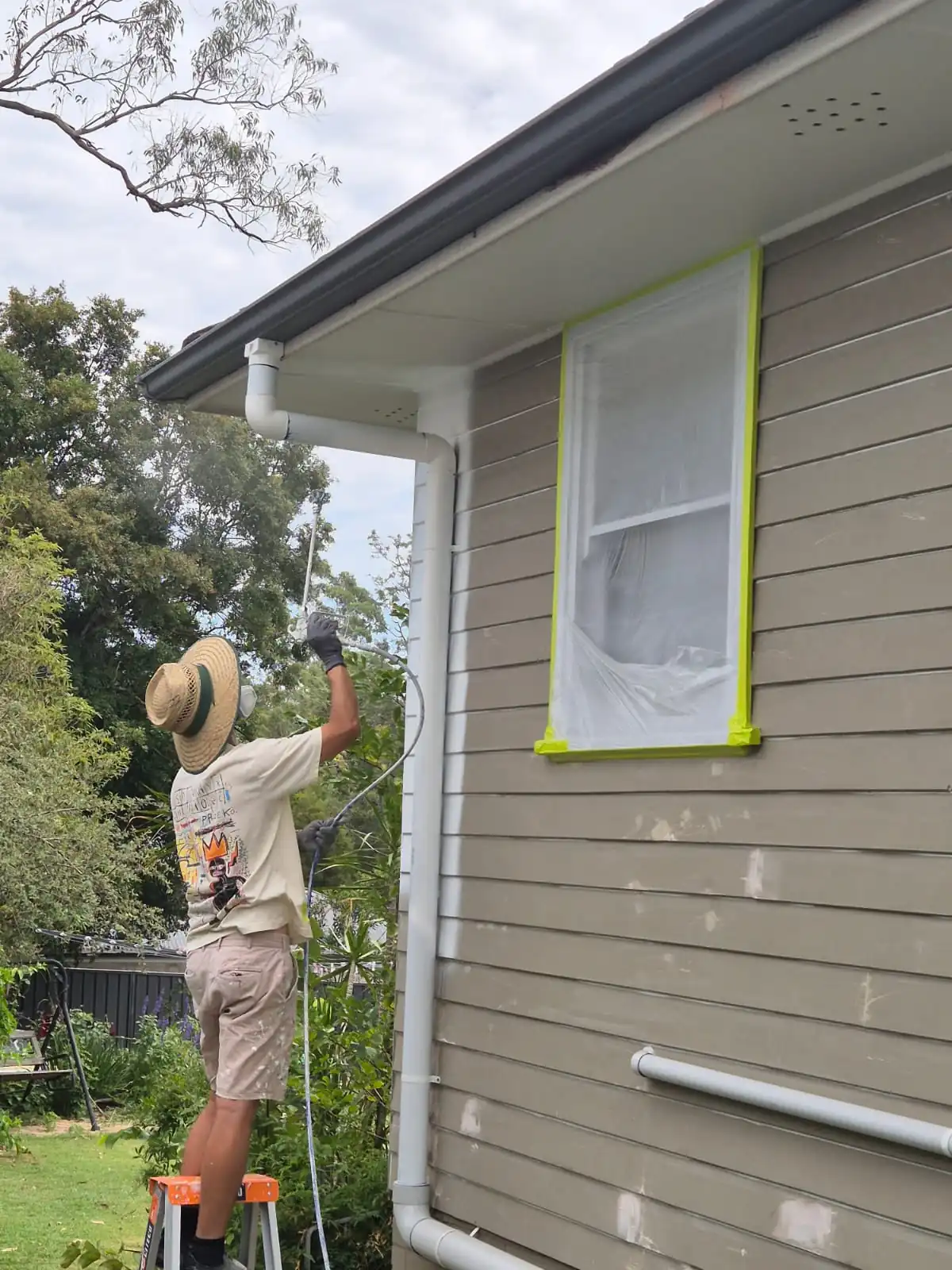
Get Your Free Estimate
Fill out the form for a free painting estimate today.
Our team will help you plan your project with clear pricing and transparent timelines. We keep communication simple and straightforward.
We reply within 2–4 hours on business days.
Step 1 of 4
Free · no obligation
Step 1 of 4: What do you need painted?
Hours
Mon-Sat:
7:00 AM - 6:00 PM
ABN
12 345 678 901
Service Areas
Proudly serving Newcastle, Lake Macquarie, Maitland, Port Stephens and the Cessnock & Hunter Valley, plus large exterior jobs on the Central Coast.
Prefer to talk, or need it sooner?
Skip the form. Call or email us directly, and we will get straight back to you.
Mon to Sat, 7:00 AM to 6:00 PM. We reply within 2 to 4 hours on business days.